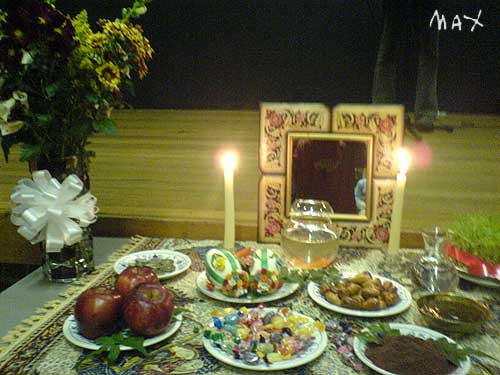
Nowrouz
Iranian new year doesn’t start like other countries all around the world. It doesn’t start in the snowy cold season of the year. It starts in the first day of Spring, with rebirth of the nature. In the spring the weather is mild, trees and flowers start to bloom, animals are out after their long sleep in the winter, birds are singing, sun rises earlier and days are longer than they used to be in the Winter, when everything is in the full beauty.
Iranians celebrate the first day of spring, which is called nowrouz, meaning new day. There are many interesting customs for celebrating the new year among iranians before and after “Sal Tahvil” which is the moment the new year starts.
Before Nowrouz there are many customs. A major one is “Khane Tekani” which is a major cleaning of their houses before starting the new year. They also plant wheat, barley or lentil sprouts about two weeks before Eid, which grow in a dish and is called “sabzeh”, and decorate eggs. They also buy new clothes, shoes to wear in the new year. They buy fruits, dried nuts, berries and raisins which is called”Aajeel”, sweets and traditional Iranian pastries such as baghlava, toot, naan-nokhodchi for entertaining visitors during Norouzi visitations after Sal Tahvil.
In the day of Eid (Nowrouz) iranians set a special table with seven specific items present starting with the letter S called “Haft Sin” meaning “seven 'S's”. The items symbolically correspond to seven creations and holy immortals protecting them. Haft Sin consists of ”sabzeh” (wheat, barley or lentil sprouts growing in a dish - symbolizing rebirth), “samanu” ( a sweet pudding made from wheat germ - symbolizing affluence), “senjed “( the dried fruit of the oleaster tree - symbolizing love), “sir” ( garlic - symbolizing medicine), “sib” ( apples - symbolizing beauty and health ), “somaq”( sumac berries - symbolizing (the color of) sunrise),”serkeh” ( vinegar - symbolizing age and patience),these are the essential items which should be included in the Haft Sin table. There are also other items which Iranian put on the table such as: “Sonbol “(Hyacinth (flower)), “Sekkeh” (Coins - representative of wealth), traditional Iranian pastries such as “baghlava”,” toot”, “naan-nokhodchi”, dried nuts, berries and raisins “Aajeel”, lit candles (enlightenment and happiness), a mirror (symbolizing cleanness), decorated eggs, sometimes one for each member of the family (fertility), a bowl of water with goldfish (life within life, and the sign of Pisces which the sun is leaving), a bowl of water with an orange in it (the earth floating in space), rose water for its magical cleansing powers, a holy book (e.g., the Qur'an, Avesta, Bible, Torah, or Kitáb-i-Aqdas,) and/or a poetry book (almost always either the Shahnama or the Divan of Hafez).
At the moment of the “Sal Tahvil” all the family members sit beside the “Haft Sin table” and await for the exact moment of the arrival of the Spring. Iranians usually pray for having a good year in these moments because it is believed that the wish that one makes in these moments will be surely accepted by God. it is also believed that whatever a person does on Norouz will affect the rest of the year, so iranian try to do whatever they plan to do in the fallowing year. On the new year’s day iranians make a special meal calles” Sabzi Polo Mahi”which is rice with green herbs served with fish.
After Sal Tahvil the visitations start. First the youth visit elders of their family to show their respect for them then elders will return their visit later. The elders give money to the young ones which is called “Eidy”, they usually put the money in the “Qur’an” and it is believed that this money is blessed. After that they go to their other relatives, friends and neighbours. The visitations are usually short, about 30 minutes, because if it takes long they won’t be able to visit everyone.These visitations continue up to the end of twelve_day celebrations of Nowrouz. On the thirteenth day families leave their homes and picnic outdoors. This day, which is called “Sizde be Dar”, is the last day of Nowrouz holidays.


